Module introduction
In Module 1, you built a Product Strategy Research Agent that could analyze a hypothesis, but couldn’t retrieve information from an external source or verify its conclusions against current evidence.
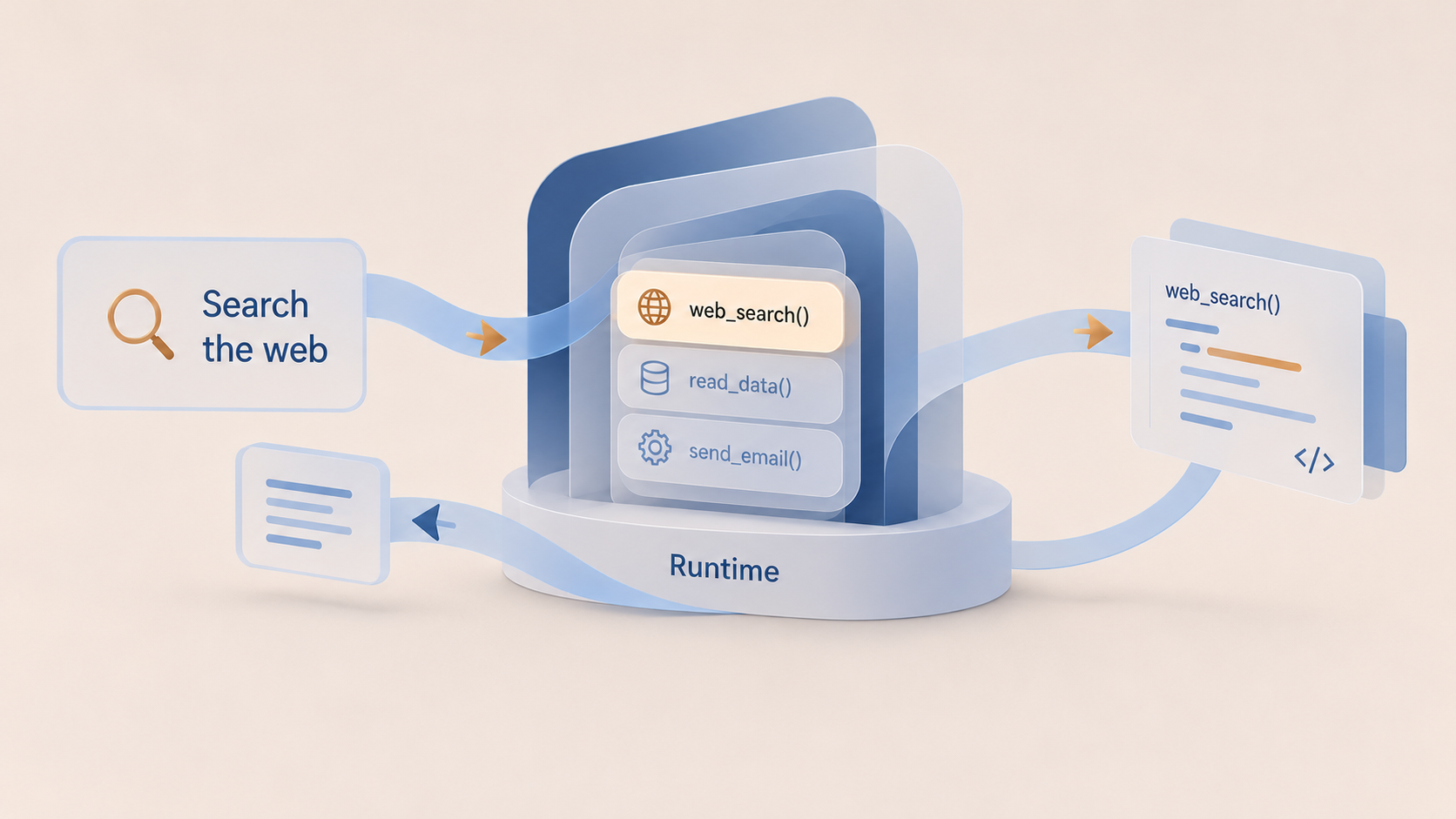
In this module, we’ll explore how agents use tools to retrieve information. You’ll see how a language model requests an operation, how the execution runtime calls the appropriate software, and how the result is returned to the model.
We’ll work with two examples: retrieving structured research records and searching the web for external evidence.
In Module 3, we’ll explore the Model Context Protocol (MCP), a standardized way for AI applications to connect with external tools and systems.
What you’ll learn
By the end of this module, you’ll be able to:
- Explain why agents need tools and when they use them.
- Distinguish the responsibilities of the LLM, execution runtime, and tool implementations.
- Build and register a custom function tool.
- Give an agent access to web search.
- Examine tool requests, returned results, and the agent’s final response.